A flagship device at a top-tier price When every new phone raises the bar a bit higher, the Huawei Mate 20 Pro has just enough premium...
A flagship device at a top-tier price
When every new phone raises the bar a bit higher, the Huawei Mate 20
Pro has just enough premium features to stand out from the crowd. It’s a
powerful smartphone with three rear cameras and a distinctive yet
reserved style, but its bold signature is a handful of neat tricks (like
a fingerprint sensor) that phones released in 2019 are just beginning
to sport.
In many ways, the Mate 20 Pro is a superlative device that rivals the Samsung Galaxy Note 9, Google Pixel 3 and iPhone XS.
But its top-tier specs and features demand a top-tier price: the Mate
20 Pro costs £899 (AU$1,599, €1,049, about $1,150), making it one of a
couple this year to break the four-digit price point in the US.
That lump of change could get you a powerful laptop, DSLR, budget
motorcycle or modest vacation. The Mate 10 Pro, released last year,
started at £699 ($799, AU$1,099), but the new Mate 20 Pro has joined a
few of this year’s other top flagships to become one of the most
expensive consumer phone on the market.
Inevitably,
then, sitting as it does in that top-tier price bracket, the Mate 20
Pro is subject to the question: is it worth all that money?
- Interested in the cheaper of the two new Mates? Read our in-depth Huawei Mate 20 review
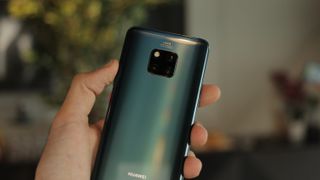
The
short answer is yes, if your only scale is what other current phones
have to offer. Whatever else happened in 2018, phone innovation didn’t,
which makes the Mate 20 Pro’s minor improvements and additions more
impressive.
But let’s delve into the specifics to see why this is pretty great phone perhaps deserves its dizzyingly high price tag.
Mate 20 Pro release date and price
The
Mate 20 Pro release date is October 26 in the UK, and November 1 in
Australia, it costs £899, €1,050, AU$1,599 (about $1,150). We haven’t
heard release dates for other regions, nor official prices, and there
are no plans to release it in the US.
There’s only one version of
the Pro (for now) with 6GB RAM and 128GB of storage. But the other
versions in the Mate 20 line – like the 7.2-inch screen Mate 20 X and
8GB RAM and up to 512GB Porsche Edition – offer different performance
and form factors if you want a slightly different take on this
already-performance-driven smartphone.
As has been the case with
Huawei, don’t expect this flagship phone to hit US shores - unless you
buy an unlocked version from overseas and find a carrier that will
support it.

Key features
If you missed the Huawei P20 Pro earlier this year, you’re in luck: the Mate 20 Pro is a better version in nearly every way.
Where
the P20 Pro had a main camera, 3x zoom telephoto and monochrome lens,
the Mate 20 Pro kept the former two and added a color ultra-wide lens.
While this may give its predecessor the edge on low-light and nighttime
shots, the Mate 20 Pro is no slouch there, and you’ll love having the
option to ‘zoom out’ with the ultra-wide.
The Mate 20 Pro
inherits the 24MP f/2.0 front-facing camera from the P20 Pro, but
expands the front camera suite with more sensors. This stretches its
notch to iPhone XS-levels of width, but that’s the price for more
dynamic photos unlocking the phone with your face.
Advertisement
At
157.8 x 72.3 x 8.6mm, Huawei’s latest phone is just a couple
millimeters bigger (and almost a millimeter thicker) than the P20. That
makes its 6.39-inch OLED screen larger, too, with resolution that’s
higher than the Google Pixel 3 and slightly better than the Samsung Note
9, at least on paper.
One
of the biggest braggable points, of course, is the Kirin 980 processor,
which is debuting on the Mate 20 Pro and its sibling devices. It's the
first 7nm chip on Android and second in the market after Apple’s
formidable A12, which came packed in the iPhone XS and iPhone XS Max.
The
Mate 20 Pro’s 6GB of RAM and 128GB of storage haven’t improved from the
P20 Pro, though you can expand the storage via a new proprietary
“nanoSD” format card to a maximum of 256GB. But if you opt to plug in a
nanoSD for more storage, you’ll have to place it in one of the phone’s
two SIM slots (cleverly stacked in an over/under tray inserted next to
the USB-C port) and give up dual SIM functionality.
These
specs are about on par with other flagship smartphones, though the
Kirin 980 is speedier than Snapdragon 845 which first appeared in a
phone earlier in March. Don’t worry about sapping the battery while
you’re putting the new chip through its paces: the Mate 20 Pro comes
with a 4,200mAh battery, which lasts as long as you’d think.
The
Mate 20 Pro has a couple things other phones today don’t, though
they’re more party tricks than market-upending features. The first is
something phone fans have been eager to try out: an in-screen
fingerprint scanner. In theory, this makes it easier to unlock your
phone while it’s resting flat than using a back-mounted fingerprint
button or facial recognition.
The second new trick probably won’t
get used much, but in a pinch, it’s a godsend: the Mate 20 Pro can
wirelessly charge other Qi-charging phones or devices. There’s nothing
more heroic than lending a hapless friend some juice when their phone is
at death’s door.
Design
Advertisement
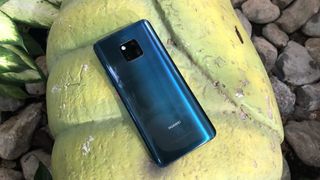
Looking
at the Mate 20 Pro tells you two things: 1) it likely costs quite a bit
of money, and 2) it’s got a signature look – but only from the back.
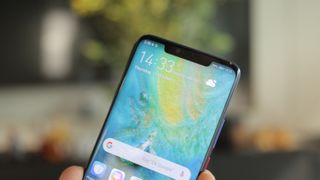
Which isn’t to knock its high-resolution, curved-edge screen and
thin-but-wide notch; we’ve just seen them elsewhere before.
The
top tier of the smartphone market requires differentiation, and Huawei
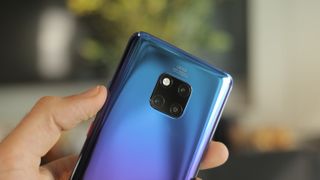
chose to let its cameras do the talking. The Mate 20 Pro collects all
three of its rear-facing cameras and its flash in a slightly-raised
block on the phone’s backside. With the rear fingerprint sensor gone,
this gives the phone a clean, semi-symmetrical look that’s better in
person than in pictures.
Individuality aside, there’s no getting
over how long and thin this phone is. The Mate 20 Pro dimensions are
still several millimeters smaller than beastly flagship phones like the
Samsung Galaxy Note 9, but it is one of the larger
phones on the market.

Advertisement
As
a result, using the Mate 20 Pro one-handed went out the door during our
testing. We found ourselves relying on the serviceable facial
recognition rather than the in-screen fingerprint sensor (located 2/3
down the front) to unlock the phone. The thinner edges made it difficult
to type or swipe around one-handed, and the sleek front-and-back
surfaces combined with the very tall ratio (19.5:9) made it a bit hard
to use the phone casually, like if I wanted to flip it out to check the
weather.
In other words, it feels like a pricey phone that
sacrificed ease-of-use for a little extra screen space, which is great
for whoever is fine with two-handing their device. To be fair, there are
a couple settings to help, but the most useful just shrinks the screen
space to put it within reach of your fingers, wasting a good portion of
that big, beautiful display.
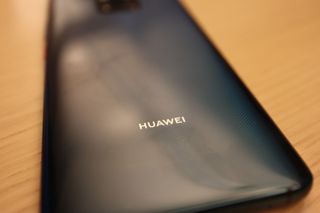
The
phone itself comes in five colors, three of which have the standard
glossy surface that makes it trivial to slide the phone over slick
tables (the slightly-protruding camera block notwithstanding). These
include a standard Black, a cream-colored Pink Gold and the signature
Huawei blue-fading-to-purple Twilight.
The
last two hues, Emerald Green and Midnight Blue, have something else: an
ever-so-slightly textured back. Remember holofoil trading cards and
comics from your childhood? That’s what this feels like, arguably
affording more grip than the other surfaces and, as Huawei claims,
resisting fingerprint smudging.
But it’s so subtle that it might
just be there to sound cool when you run your finger across it. (As
“cool” as a muted zipper sounds, anyway.) In other words, it’s one of
many small things that contribute to the Mate 20 Pro’s rep as a pricey,
elite phone.
Advertisement
The
other instant giveaway, of course, are the three rear cameras, arranged
in a signature 2x2 grid. A Huawei spokesperson reckoned that the camera
block would instantly tip bystanders off to your phone’s make and
model, and they aren’t wrong.
The Mate 20 Pro has a full IP68
water and dust resistance rating, which is the industry standard these
days. And lastly, if you lamented when the Mate 10 ditched the headphone
jack, hopefully you bought some Bluetooth headphones in the interim:
the Mate 20 Pro doesn’t have a 3.5mm port, either. If that’s a
dealbreaker, consider the vanilla Mate 20 or the gamer-focused Mate 20 X – both of which include the standard audio port.
Screen
Mate
20 Pro’s OLED 6.39-inch screen is gorgeous, plain and simple. It helps
that the Mate 20 Pro ditched the Mate 10’s bottom-front button for a
seamless display. Its bezels are pretty thin, especially without a lower
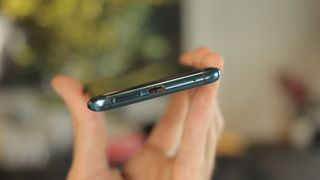
speaker grille: instead, sound comes out of the bottom-facing USB-C
port. (Don’t worry, its output isn’t dampened much when something is
plugged in.)
The
display has an impressive 19.5:9 ratio 2K+ resolution (3120x1440),
which is about 537 pixels per inch. That puts it ahead of the Google
Pixel 3 at 439ppi and just past the Samsung Galaxy Note 9 at around
514ppi. While there’s not too much content that makes full use of this
resolution – and, sadly, there’s no out-of-the-box option to split the
screen between two windows – it’s still a sharp and vibrant display.
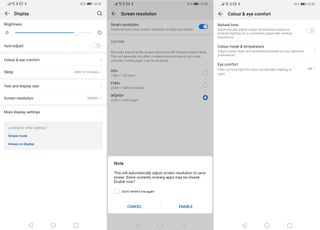
If
you want to shift the color temperature or ditch all the harsh blue
light, there are options in the settings to tweak those to your
preference. If you want, you can even downgrade the Mate 20 Pro
resolution to full HD or lower, which reduces battery drain, though that
feels like a Harrison Bergeron-level injustice. Even dialed down to
HD+, the expansive screen looks good.
Advertisement
The
Mate 20 Pro display’s edges curve down in a this-looks-expensive style
straight out of Samsung’s playbook. Even if it doesn’t come with any
interactive elements (like the squeeze-to-activate HTC U11 Edge Sense), the curved screen admittedly gives the Pro a classy, if unoriginal, look.
Speaking
of following trends – yes, the Mate 20 Pro has a notch. It’s about as
wide as the iPhone XS for the same reason: to fit in the front-facing
camera and sensor package. If you find the notch hideous, you can hide
it with an effect that shifts the ‘ears’ into dark mode, which decently
simulates a full black bar at the top.
It’s a good bet that the
OLED screen is brighter than the 820 nits its less-powered sibling, the
Mate 20, is capable of, but we don’t have an official word from Huawei.
Suffice to say, it can get bright. Very bright.
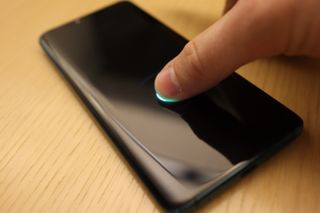
The
in-screen fingerprint sensor does work, and pretty reliably... so long
as your finger is placed in the small target area. A fingerprint zone
pops up when the screen activates, which means you’ll either have to tap
the display ‘awake’ to find your target or guess where the sensor is.
That’s much harder to do by feel when grabbing your phone from a pocket.
Even
then, it’s not perfect at recognizing fingerprints, and is so-so at
reading portions of fingers. While the in-screen sensor certainly makes
the Mate 20 Pro easier to unlock than a back-mounted sensor or facial
recognition when it’s resting flat, the feature is more cumbersome than a
dedicated physical button.
Still, Huawei is ushering in the age
of in-screen fingerprints, which deserves praise for keeping the front
screen lean and clean.





COMMENTS